Verification · 7 min read
What a Certificate of Analysis Actually Proves — and What It Doesn't
Nearly every supplier says 'COA available.' Far fewer will show you one before you buy, and fewer still ship a certificate that matches the vial in the box. Here is how to tell the difference.
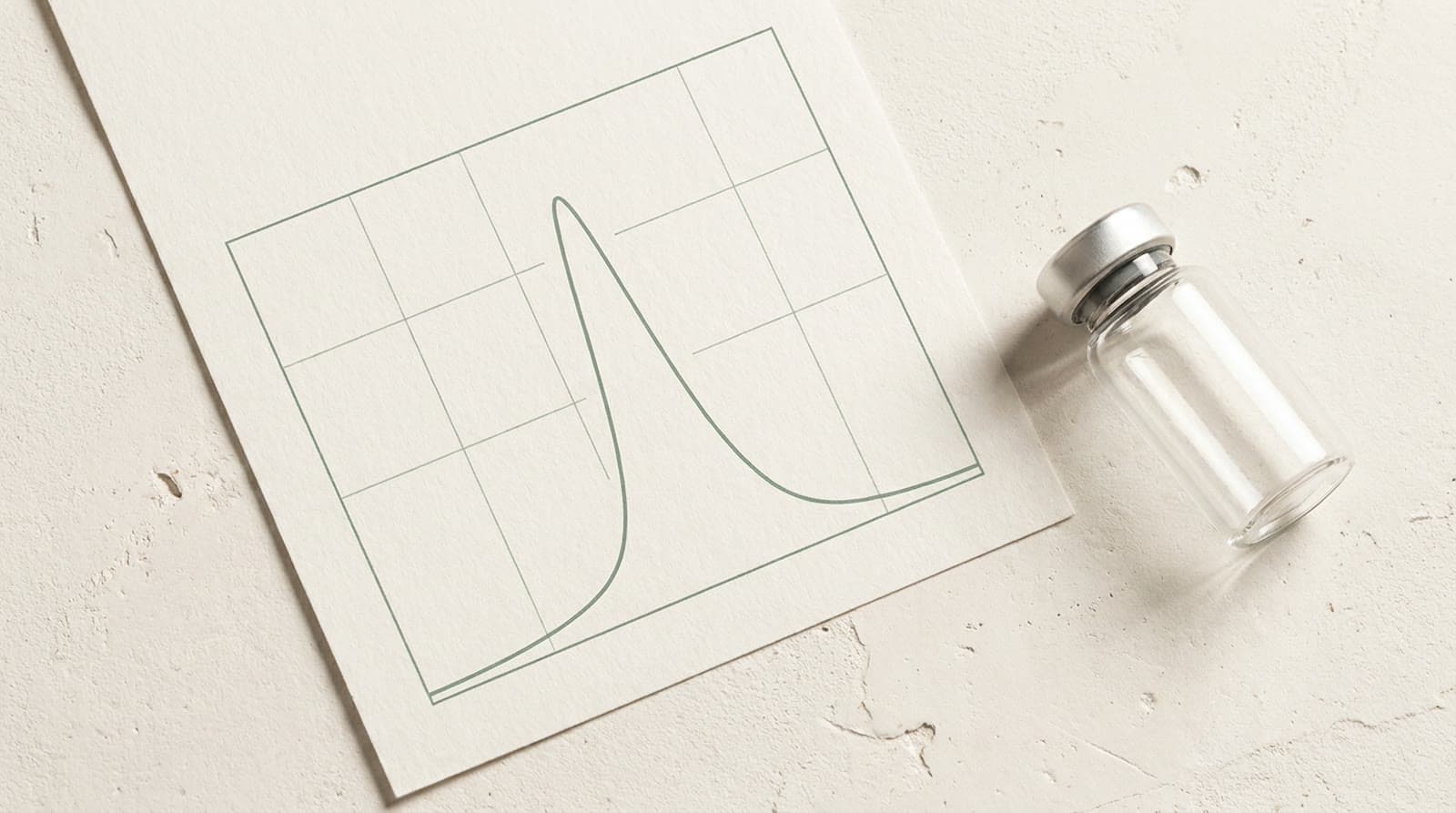
A certificate answers two questions, not one
A useful certificate of analysis establishes two separate facts, and conflating them is the most common error buyers make. The first is identity: is the molecule in this vial the molecule named on the label? The second is purity: what fraction of the material is that molecule, and what is the rest?
Identity is normally established by mass spectrometry. The instrument measures molecular mass to within a fraction of a dalton, and the observed mass is compared against the theoretical mass for the intended sequence. A match is strong evidence of identity; a mismatch is conclusive evidence against it.
Purity is normally established by high-performance liquid chromatography. The sample is separated across a column, and the detector output is integrated to give the proportion of total signal attributable to the main peak. A stated '99% purity' almost always means 99% of integrated peak area at a specified wavelength.
Mass spectrometry tells you what it is. HPLC tells you how much of it is that. A certificate showing only one is answering half the question.
The fields that matter
Batch or lot number is the single most important field, because it is what connects the certificate to the physical vial. A certificate with no batch number cannot be tied to anything and is decorative.
Date of analysis matters because peptide purity is a property of the material at a point in time. A certificate from three years ago describes material that may no longer exist.
Testing laboratory should be named. An in-house certificate is not worthless — the supplier may have excellent instrumentation — but it is a self-assessment, and it should be labelled as one rather than implied to be independent.
Molecular weight should be stated and should match published values for the compound. This is where a surprising number of certificates fall apart, and it is the easiest field for a buyer to check independently.
Four ways a true certificate still misleads
First, the batch mismatch. The certificate is real, the analysis was performed, and the vial you received is from a different lot. Check that the batch number on the certificate matches the batch on the vial.
Second, the wavelength choice. HPLC purity is reported at a detection wavelength. At 220 nm the peptide bond absorbs strongly and most impurities are visible. At 280 nm only aromatic residues absorb well, and a certificate reported there can look cleaner than the material is. A certificate that does not state its wavelength is withholding relevant information.
Third, net peptide content. Lyophilized peptide is not pure peptide by mass — it contains residual water and counterions, commonly trifluoroacetate from purification. A vial can be 99% pure by HPLC and still contain meaningfully less peptide by mass than the label implies. Net peptide content is a separate measurement and is often absent.
Fourth, the single certificate reused across a catalog. If every product page links to a certificate with the same batch number, the certificates are illustrative rather than real.
What to do with this
Ask for the certificate before purchase, not after. A supplier confident in their material will send it. The response to that request is itself the most informative test you can run.
Check the molecular weight against published literature. It takes thirty seconds and it catches both honest labelling errors and the TB-500 fragment problem, where two suppliers legitimately ship molecules differing more than fivefold in mass under the same product name.
Match the batch number when the package arrives. If it does not match, the certificate described someone else's material.
Common questions
What purity percentage should a research peptide have?
The industry convention is a ≥95% floor by HPLC, with better suppliers publishing ≥98% or ≥99%. The percentage matters less than whether the figure is tied to a named batch, dated, and reported at a stated detection wavelength.
Is an in-house certificate of analysis worthless?
No, but it is a self-assessment and should be labelled as one. The concern is not that in-house testing is inaccurate — it is that a supplier grading its own work has an obvious incentive, and a certificate that implies independence without providing it is the actual problem.
What is net peptide content?
The proportion of the vial's mass that is actually peptide, as opposed to residual water and counterions such as trifluoroacetate left over from purification. It is a separate measurement from HPLC purity, and a vial can be 99% pure by HPLC while containing appreciably less peptide by mass than the label suggests.
All products are intended strictly for laboratory research use. Not for human or veterinary use. Not for diagnostic or therapeutic use. Not a drug, food, or cosmetic.